
Between the salt and the cracks: Braskem's socio-environmental tragedy
Also available at Epub
Summary
The case of Braskem in Maceió, Alagoas, illustrates the dramatic consequences of rock salt exploration without due consideration for geological and environmental risks. Since the 1970s, with the installation of Salgema Indústrias Químicas, later incorporated by Braskem in 2002, the promise of economic development has overshadowed the potential dangers of mining by dissolution. The situation reached a critical point in 2018, when subsidence and fissures in the ground began to affect several neighborhoods, resulting in the displacement of 60,000 residents and causing significant environmental damage. Subsequent investigations, including a report by the Geological Survey of Brazil in 2019 and a Parliamentary Commission of Inquiry in 2023, have revealed a complex web of responsibilities, involving corporate negligence and failures in public enforcement. Despite the compensation paid by Braskem, totaling R$3.7 billion, the affected community continues to face socioeconomic challenges, such as inflation in the local real estate market and impacts on physical and mental health.
Keywords: Environmental disaster; Mining; Social Impact; Environmental Repair
A secret sea of salt
Maceió, the capital of Alagoas, is a city that holds in its subsoil a geological treasure of immeasurable value: a vast layer of rock salt. This mineral wealth, inherited from an ancient sea that covered the region millions of years ago, has shaped not only the geography but also the economic destiny of the city.
With a population of almost one million inhabitants (IBGE, 2022) spread over 50 neighborhoods, with Pinheiro being the 17th most populous (19,062 inhabitants), Bebedouro the 29th (10,103 inhabitants) and Mutange the 46th (2,632 inhabitants), Maceió stands out as the 44th largest municipal GDP in Brazil. Its true uniqueness lies below the surface, in the salt deposits that stretch for hundreds of kilometers.
A camada de sal-gema, por sua natureza, é extremamente solúvel em água, tornando-a um material instável e suscetível a deformações. Esse composto é extremamente valioso para a indústria devido a suas várias aplicações.
Primariamente, o cloreto de sódio extraído do sal-gema é essencial para a produção de uma ampla gama de produtos químicos, incluindo cloro e soda cáustica, que são fundamentais para a indústria petroquímica e para a fabricação de plásticos, papel, detergentes, fertilizantes, alimentação de animais de criação, derreter neve em rodovias, no extermínio de ervas daninhas e na produção e conservação de alimentos para humanos.
Para extrair este valioso recurso, a indústria recorre a um método engenhoso, porém não isento de riscos: a mineração por dissolução. A água doce é injetada nas profundezas da terra, dissolvendo o sal e trazendo-o à superfície na forma de salmoura. Este processo, embora eficiente, deixa para trás um legado subterrâneo de vastas cavernas, criando um cenário de instabilidade geológica que ameaça a própria cidade que se ergue acima. Além dos riscos de subsidência, a mineração de sal-gema também pode apresentar riscos ambientais, como a contaminação das águas subterrâneas se a gestão da salmoura e dos resíduos não for realizada de forma adequada.
From the promise of development to chaos
Na década de 1970, Maceió recebeu a promessa de um futuro econômico brilhante com a chegada da Salgema Indústrias Químicas. A instalação da empresa no Pontal da Barra, foi o prenúncio de uma transformação que ninguém poderia prever. O que parecia ser o alvorecer de uma era de prosperidade logo se revelou o início de uma controvérsia que perdurou por décadas.
A empresa, instalada à beira mar, desvalorizou imediatamente toda a região sul da orla marítima da capital. Com o crescimento da extração dos recursos naturais na região, a ampliação da área de extração mineral começou a ser discutida, porém ambientalistas, ecologistas, políticos, cientistas e a população começaram a se movimentar contrariamente, realizando protestos (vide Figura 1). Mesmo assim, o governo autorizou a ampliação das instalações dedicadas à extração de sal-gema na região.
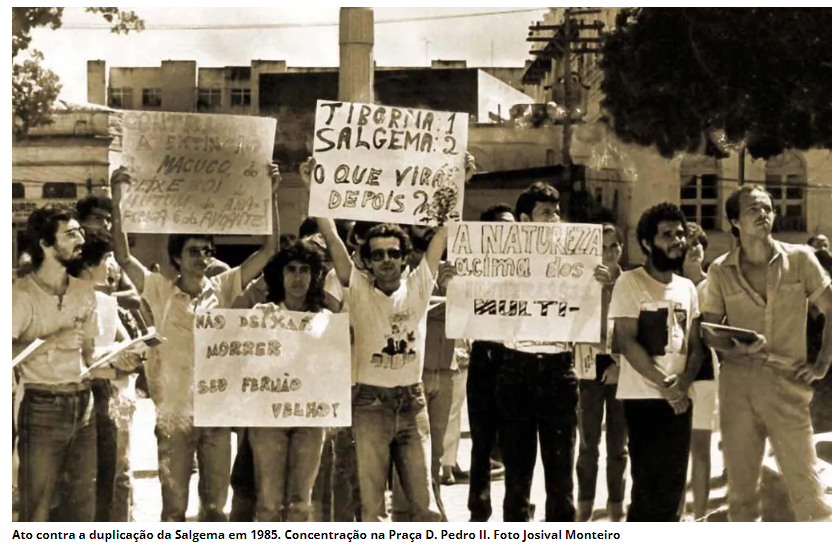
Figure 1: act against the duplication of the salgema in 1985 at Praça D. Pedro II. Photo Josival Monteiro.
In 2002, some companies in the mining sector merged to form Braskem, which incorporated the existing operations in Maceió. The presence of mining in the region continued to strengthen and be expanded based on the promise of job creation and promotion of the local economy, in addition to presenting itself as an engine of development, capable of boosting the industry, attracting investments and generating wealth. The creation of jobs and the prospect of economic growth were attractive to a population that was looking for alternatives for development.
Rock salt mining came to be seen by some as a symbol of modernization and progress, representing the arrival of new technologies and the insertion of Maceió on the country's industrial map. After all, the company began to present itself as an innovative force, capable of bringing technological advances and modernizing the region.
Regarding environmental impacts, Braskem stated that rock salt mining would be carried out safely and sustainably, using advanced techniques and technologies to minimize the consequences of its activities, following environmental standards and regulations, ensuring the preservation of the environment and the safety of the population. The company also highlighted its investments in social projects, such as support for education, health and culture, seeking to improve the quality of life of the local population.
Apesar disso, o sonho começou a desmoronar em 2018. Literalmente. A região de Maceió tem enfrentado eventos recorrentes de afundamentos e fissuras no solo, afetando significativamente bairros como Pinheiro, Bebedouro, Mutange, Bom Parto e Farol. Esses eventos resultaram no deslocamento de 60 mil moradores pelo risco de desabamento dos imóveis e danos substanciais às infraestruturas locais, deixando para trás não apenas suas casas, mas também suas histórias e raízes.
As investigações que se seguiram revelaram uma verdade incômoda: as atividades de mineração da Braskem eram um fator chave nos problemas geológicos. Além do solo instável, o impacto incluía a perda de vegetação, a redução da população de animais, a salinização de aquíferos e o assoreamento - acúmulo de sedimentos e resíduos carregados pelo vento e as chuvas aos rios e lagos quando não há vegetação ao redor para protegê-los - da laguna Mundaú,
Thus, the region of Maceió, previously known as an ecological paradise, was transformed into uninhabitable, as shown in Figure 2.
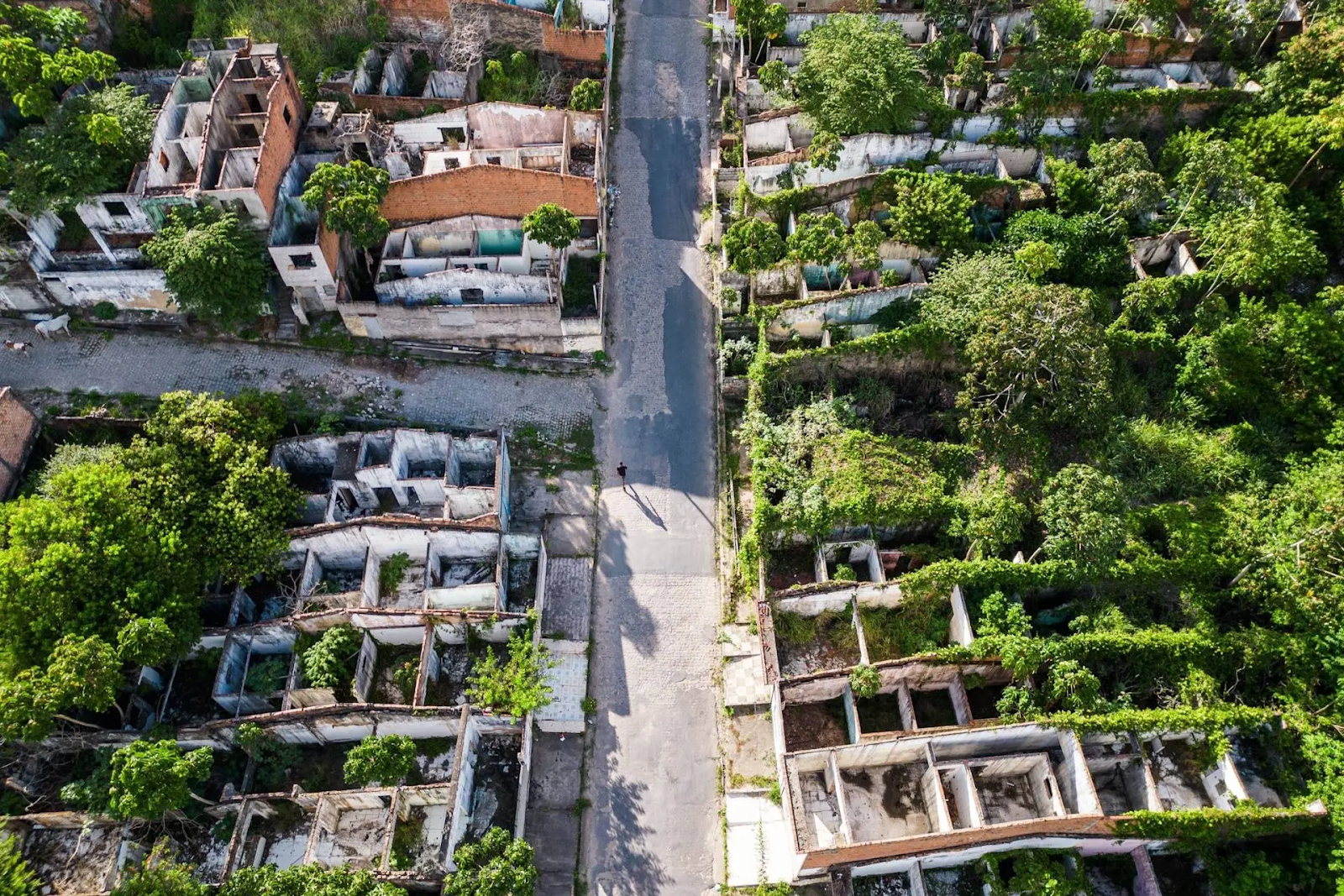
Figure 2: Abandoned houses in the Bebedouro neighborhood, in 2018. Photo: Jonathan Lins/Alamy
A 2018 study sought to unravel the mystery behind the cracks and cracks in homes. Four hypotheses were raised, from the geotechnical characteristics of the soil to the exploitation of groundwater. However, two stood out: the presence of voids in the subsurface and active tectonic structures in the region. The conclusion was disturbing: the mining process had directly interfered with the geological structure of the area, setting off a chain reaction of instability.
Uma cidade dividida entre corporação e comunidade
The year 2019 marked a turning point in the rock salt saga in Maceió. The Geological Survey of Brazil (CPRM) published a technical report that left no room for doubt: the extraction of rock salt had set off a geological chain reaction, turning entire neighborhoods into unstable ground. The study pointed to the occurrence of a destabilization of the cavities of rock salt extraction, causing halokinesis (movement of salt) and creating a dynamic situation with reactivation of preexisting geological structures, subsidence and ruptial deformations on the surface of part of the Pinheiro, Mutange and Bebedouro neighborhoods, in Maceió.
A resposta foi imediata e drástica - o Instituto do Meio Ambiente (IMA) suspendeu a licença ambiental da Braskem, e a Agência Nacional de Mineração (ANM) aprovou o plano de fechamento das minas. Com suas operações encerradas, a Braskem se viu forçada a encarar as consequências de décadas de exploração. A empresa abriu seus cofres, desembolsando R$3,7 bilhões em indenizações e auxílios. Mas será que o dinheiro poderia realmente compensar o custo humano desta tragédia? O fato é que representantes das vítimas da atividade de exploração de sal-gema da Braskem criticaram os acordos fechados por órgãos públicos com a mineradora e denunciaram a falta de diálogo nos acordos firmados. A comunidade, segundo eles, foi silenciada, forçada a aceitar termos ditados pela vulnerabilidade de sua situação.
The drama unfolded on the streets of Maceió, where 17 thousand people suddenly found themselves in search of a new home. The irony was cruel: the deal that was supposed to help them ended up inflating the local real estate market. The rent assistance of R$1,000.00 for six months, previously a lifeline, has become insufficient in the face of the new market reality. Rick Magalhães, from the Association of Real Estate Market Companies of Alagoas (2024), confirmed: rental prices have skyrocketed. What once guaranteed a roof over its head in Maceió, now barely covered a fraction of the new cost of living. The owners, aware of the aid received by the displaced, adjusted their prices, creating a vicious cycle of speculation.
A verdade por trás das rachaduras: a CPI da Braskem e o desmoronamento de um império
As Maceió sank into an unprecedented crisis, Braskem's Parliamentary Commission of Inquiry (CPI) emerged in 2023. This investigation promised to shed light on the four fundamental pillars of a tragedy that shook not only the soil, but the confidence of an entire city.
- Braskem's responsibility: The CPI delved deep into the bowels of Braskem's operation, unearthing disturbing evidence. Internal documents revealed that the company had been aware of geological risks for years, but chose to maintain operations in the name of profit. Testimonials from former employees painted a picture of a corporate culture that prioritized productivity over safety. The question that echoed through the halls of the commission was: To what extent had corporate greed undermined not only the soil but also business ethics?
- The omission of the public power: The investigations did not spare the authorities. The granting of mining licenses, once seen as a bureaucratic routine, was now under intense scrutiny. The CPI exposed a web of negligence that stretched for decades, with inspection agencies turning a blind eye to egregious irregularities. The public power, which should be the guardian of collective well-being, seemed to have been a silent accomplice in the construction of this catastrophe.
- The social and environmental impact: The most moving testimonies came from the residents themselves. Entire families have reported the pain of seeing their homes, built with the sweat of a lifetime, literally crumble. The CPI heard histories of respiratory diseases, chronic anxiety and depression - the human cost of an environmental tragedy. Ecologists presented alarming data on soil and water contamination, painting a bleak future for the local ecosystem.
- The search for justice: As the evidence piled up, the CPI became an arena for the clamor for justice. Representatives of the affected communities demanded more than simple financial compensation, they sought a fundamental change in the way corporations operate in vulnerable communities. Braskem, in turn, faced a dilemma: how to balance its legal responsibility with its moral obligation?
As the CPI reached its final conclusions, it became clear that this was not just a case of geological fault, but of ethical failure on multiple levels. The Maceió tragedy has exposed the cracks not only in the soil, but in the entire system that allows corporations to operate with impunity at the expense of local communities.
The final report of the CPI is not an end point, but a starting point. It calls for concrete action and a step change in how companies are held accountable for their impacts.
Questions for the discussion
1) How could Braskem have applied risk management principles to avoid or mitigate the crisis in Maceió? And what strategies could have been implemented to manage the immediate consequences, balancing the interests of residents, employees, shareholders and authorities?
2) How could Braskem's decision-making processes be redesigned to properly consider environmental and social issues, balancing these demands with profit objectives?
3) Analyze Braskem's organizational communication during the crisis. What flaws do you identify, and how could the company have improved its stakeholder communication strategy?
Gallery
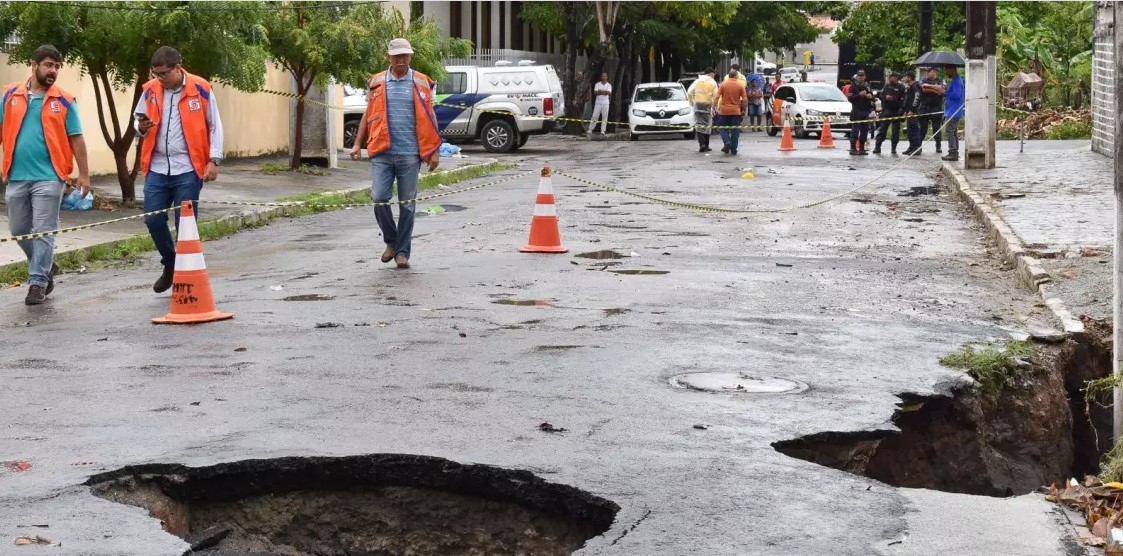
Colapso de mina da Braskem em Maceió gerou afundamento do solo em alguns bairros (Marco Antonio/Secom Maceió.
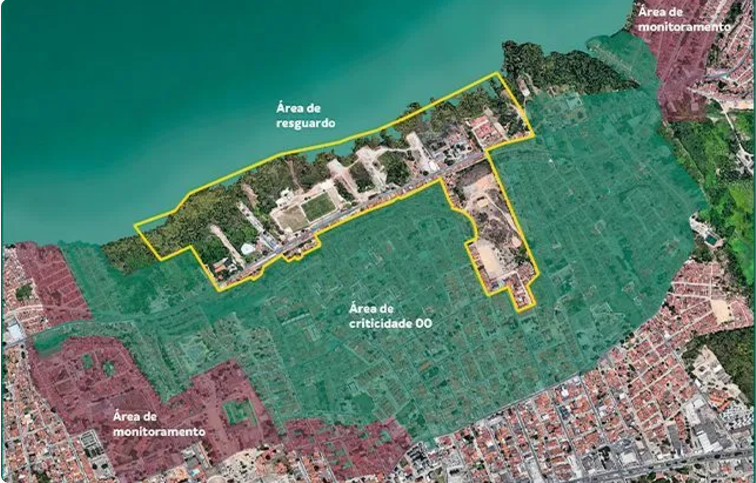
Map of priority action lines, defined by the Civil Defense of Maceió.
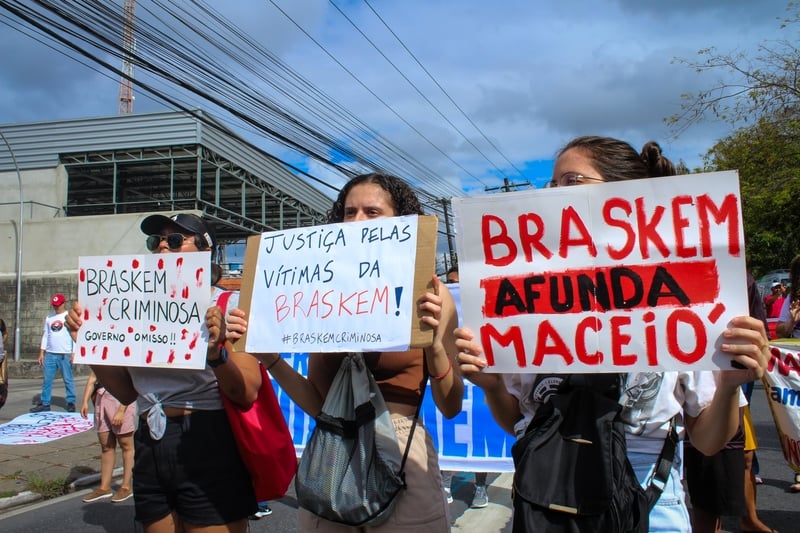
People affected by mining ask that Braskem be "evicted" from Maceió - Mykesio Max/MST Communication.
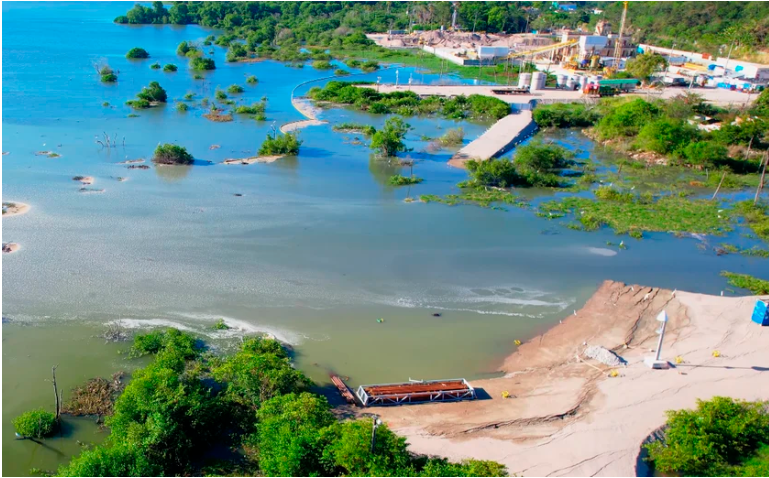
Mines 20 and 21, near mine 18, which collapsed, are under the waters of the Mundaú Lagoon and may have suffered damage - Photo: Edilson Omena.
REFERENCES:
AGÊNCIA BRASIL. Alagoas state on alert as rock salt mine risks collapse. 2023. Available at: https://agenciabrasil.ebc.com.br/en/geral/noticia/2023-12/alagoas-state-alert-salt-mine-risks-collapse. Accessed on: 10 set. 2024.
AGÊNCIA BRASIL. Victims criticize agreement between public agencies and Braskem. 2023. Available at: https://agenciabrasil.ebc.com.br/geral/noticia/2023-12/vitimas-criticam-acordo-de-orgaos-publicos-com-braskem. Accessed on: 22 out. 2024.
BRASIL DE FATO. Rent in Maceió skyrockets after news of the eviction of 17 thousand people. 2020. Available at: https://www.brasildefato.com.br/2020/01/15/valor-do-aluguel-em-maceio-dispara-apos-noticia-do-despejo-de-17-mil-pessoas. Accessed on: 10 set. 2024.
BRASKEM. Alagoas Timeline. 2024. Available at: https://www.braskem.com.br/linha-do-tempo-alagoas. Accessed on: 10 jul. 2024.
BRASKEM. Profile and history. 2024. Available at: https://www.braskem.com.br/perfil#2017. Accessed on: 12 jul. 2024.
CAPRETZ, A. The loss of cultural heritage as a result of the largest environmental disaster in progress in the world: The case of subsidence of neighborhoods in Maceió (AL). Jatobá Magazine, Goiânia, v. 4, e-73021, 2022. Available at: https://revistas.ufg.br/revjat/article/view/73021/38408. Accessed on: 9 Dec. 2024.
IBGE. IBGE releases the Population Estimates of the municipalities for 2018. 2018. Available at: https://agenciadenoticias.ibge.gov.br/agencia-sala-de-imprensa/2013-agencia-de-noticias/releases/22374-ibge-divulga-as-estimativas-de-populacao-dos-municipios-para-2018. Accessed on: 15 Aug. 2024.
IBGE. Panorama Maceió. 2024. Available at: https://cidades.ibge.gov.br/brasil/al/maceio/panorama. Accessed on: 9 Dec. 2024.
IMA-AL. Facts Braskem case. 2024. Available at: https://www2.ima.al.gov.br/fatos-caso-braskem/. Accessed on: 9 Dec. 2024.
THE ECO. There is nothing left: Maceió bears the environmental scars of salt mining. 2024. Available at: https://oeco.org.br/reportagens/nao-sobrou-nada-maceio-carrega-as-cicatrizes-ambientais-da-mineracao-de-sal/. Accessed on: June 11, 2024.
TICIANELI, E. Salgema and the movement against the expansion of 1985. History of Alagoas, 2024. Available at: https://www.historiadealagoas.com.br/salgema-e-o-movimento-contra-a-ampliacao-de-1985.html. Accessed on: 23 out. 2024.
https://www.conjur.com.br/2024-jan-18/rn_26794_caso-braskem-missao-conjunta-articula-solucoes-para-atingidos-em-maceio/Acesso em 09 dez. 2024.
https://www.cnnbrasil.com.br/nacional/defesa-civil-de-maceio-aponta-risco-iminente-de-colapso-em-mina-da-braskem/Acesso em 09 dez. 2024.
https://www.brasildefato.com.br/2023/12/10/braskem-bairro-em-maceio-esta-afundando-meio-centimetro-por-hora-segundo-defesa-civil. Acesso em 09 dez. 2024.
https://tribunahoje.com/noticias/cidades/2024/01/04/132047-defesa-civil-estadual-teme-colapso-de-mais-duas-minas-da-braskem-na-regiao-do-mutange. Acesso em 09 dez. 2024.
About The Authors
Jéssica Lainne Ramos Tavares is a Geologist from the University of Brasília (UnB), with specializations in Water and Environmental Management from the Federal University of Pará (UFPA) and in Competitive Intelligence and Marketing Innovation. He is currently a student of Administration at the Department of Administration (ADM/FACE) at UnB and works in the area of People Management at the State Secretariat for Social Development of the Federal District. He is a volunteer member of the ADM Casoteca. Interest in topics related to People Management, Women's Entrepreneurship, Innovation and Marketing. Contact: jessicalainnet@gmail.com
Victoria Cristina Ferreira Versiane she is a student at the Department of Administration (ADM/FACE) at the University of Brasília (UnB). He is a volunteer member of the ADM Casoteca. E-mail: vitoria.fv664@gmail.com
Patrícia Guarnieri is a Professor at the Department of Administration and the Graduate Program in Administration (PPGA) at the University of Brasília (UnB). Postdoctoral internship at the Università di Bologna - Circular Economy (2019- 2020). Postdoctoral internship at the University of Brasília - Strategic Public Procurement (2016-2018). PhD in Production Engineering from the Federal University of Pernambuco (2009-2012). Master's degree in Production Engineering from the Federal Technological University of Paraná (2005-2006). Interest in topics related to Supply Logistics and Reverse Logistics, Management of partnerships and collaborative relationships in SCM, Circular Economy. Environmental, social governance and Decision analysis. E-mail: pguarnieri@unb.br